
ADVERTISEMENT
For 30 years, I believed the man I loved had abandoned me.
Not just me.
Ten children, too.
A week before our wedding, he disappeared without warning, leaving behind a three-sentence note and a lifetime of questions.
For years, I hated him. Then I mourned him.
Eventually, I convinced myself I had made peace with what happened. But I never stopped wondering why.
The answer arrived when I was sixty-two years old, carried to my front door by a gray-haired lawyer holding a wooden box.
And what I found inside changed everything.
I met Adrian Foster when I was 32.
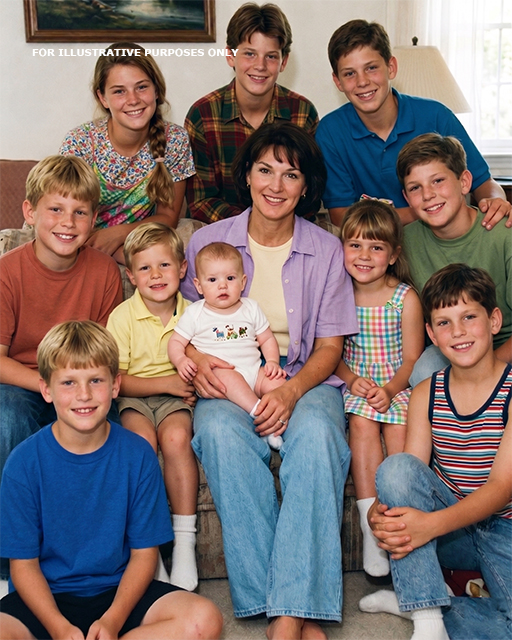
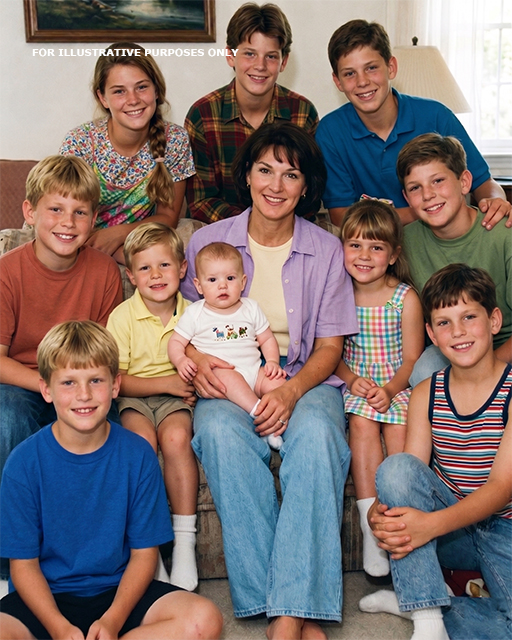
The first thing I learned about him was that he was a widower. The second thing I learned was that he had ten children.
The third thing I learned was that despite being exhausted nearly all the time, he adored every one of them.
His wife, Laura, had died suddenly from a brain aneurysm two years earlier.
One ordinary morning, she had kissed her children goodbye before school. By that evening, she was gone.
The loss shattered the family. Adrian did his best to hold everyone together, but grief hung over the house like a storm cloud that never fully disappeared.
Maybe that’s why we connected.
We were both lonely people trying to rebuild lives that hadn’t turned out the way we expected.
The children became part of my life one by one.
Hannah, the oldest, was seventeen and carried responsibilities no teenager should have. Miles loved fixing things.
Abigail could talk for hours without stopping. Tristan and Jordan, the twins, turned everything into a competition.
The younger children filled the house with laughter, noise, and endless energy.
And then there was little Ruby.
Ruby followed me everywhere.
One afternoon, only a few months after I’d started spending time with the family, she slipped and called me “Mom.”
The room immediately went silent.
Ruby’s eyes widened. “I’m sorry,” she whispered.
I knelt beside her and pulled her into a hug.
“You never have to apologize for loving someone.”
That night, I cried in my car before driving home.
Not because I was sad.
Because I loved them all more than I ever thought possible.
A year after we met, Adrian proposed.
There was no elaborate setup. No expensive restaurant. No hidden photographer.
Just a crowded dinner table, ten children pretending not to listen, and a nervous man holding my hand.
“Caroline,” he said softly, “you already belong to this family.”
His voice shook.
“I was hoping you’d stay forever.”
The children erupted before I could answer.
I laughed through tears. “Yes.”
The celebration that followed was loud enough for the neighbors to hear.
For the first time in years, everyone looked genuinely happy.
Including Adrian.
Or at least I thought so.
Three months before the wedding, things began to change.
Nothing dramatic. Just small things that felt wrong.
Adrian started taking unexplained trips. He received phone calls he wouldn’t discuss.
Some nights I’d find him sitting alone outside long after everyone else was asleep.
Once I caught him crying.
When he noticed me, he quickly wiped his eyes and blamed the smoke from the grill.
Another time, I found legal documents tucked inside a desk drawer.
He closed the folder before I could read them.
“It’s nothing,” he said.
But it wasn’t anything.
I knew that much. I just didn’t know what it was.
Was he having financial problems? Legal trouble? Something else entirely?
I had no answers.
A week before our wedding, I woke up and found his side of the bed empty.
His truck was gone. His phone was disconnected.
At first, I thought something had happened.
By noon, panic had taken over. By evening, the police were involved.
The only thing Adrian left behind was a note.
I’m sorry.
I can’t do this.
Please don’t look for me.
That was all.
No explanation. No goodbye. Nothing.
The investigation lasted months.
There was no sign of foul play. No evidence of an accident.
No financial activity. No confirmed sightings.
Eventually, the case went cold.
Everyone reached the same conclusion.
Adrian had left voluntarily.
I hated him for it.
Then I hated myself for hating him.
And through it all, ten children needed someone to stay.
My mother had a simple solution.
“They should go to relatives or foster families.”
I looked around the kitchen table at ten devastated faces.
Ten children who had already buried one parent.
Ten children who believed another had chosen to leave.
“No.”
My mother’s expression hardened.
“They aren’t your responsibility.”
I looked at Ruby. Then at all the others.
“They are now.”
The years that followed were the hardest of my life.
I worked two jobs.
Sometimes three.
Hannah helped care for the younger children.
Miles fixed anything that broke because we couldn’t afford repairs.
Everyone carried part of the burden.
We survived because we had no choice.
And somehow, survival eventually became a life.
The children graduated.
Started careers.
Got married.
Had children of their own.
Every success made me proud.
Every milestone reminded me of the one person who wasn’t there to see it.
And still, the question remained.
Why?
Why had Adrian left?
30 years later, I finally got an answer.
It was a Saturday afternoon.
The house was packed with family.
Children. Spouses. Grandchildren.
The kitchen smelled of roast chicken and fresh bread.
The twins were arguing about football. Ruby was helping set the table.
Everything felt normal.
Then someone knocked on the door.
A silver-haired man stood outside carrying a briefcase and a wooden box.
“My name is Richard Coleman,” he said.
“I was Adrian Foster’s attorney.”
The world seemed to stop.
My throat tightened.
“Adrian is dead, isn’t he?”
The lawyer lowered his eyes.
“He passed away six months ago.”
I hadn’t seen Adrian in thirty years.
Yet hearing those words felt like losing him all over again.
Inside the wooden box was a letter addressed to me.
There were also ten smaller envelopes.
One for each child.
The entire family gathered around the dining table as I unfolded the first page.
The moment I saw Adrian’s handwriting, I felt thirty years disappear.
The letter began:
If you’re reading this, then I am gone. And if I am gone, then I can finally tell you the truth.
My hands started shaking.
Adrian explained that six days before our wedding, he received devastating medical news.
Not another woman. Not debt. Not a secret family.
A genetic diagnosis.
Doctors believed he carried a rare neurological disease that had destroyed his father’s life years earlier.
The illness slowly stole memory, judgment, and personality.
At the time, specialists believed Adrian had already begun showing early symptoms.
The legal paperwork I found had been disability documents.
The secret trips were medical appointments.
The late-night tears were fear.
Pure fear.
He had watched his father become a stranger before he died.
And he was convinced the same fate awaited him.
Then came the part none of us expected.
The day after receiving the diagnosis, Adrian suffered a complete emotional collapse.
He drove away intending to clear his head.
Instead, overwhelmed by panic and despair, he attempted to take his own life.
He survived.
A stranger found him unconscious and called emergency services.
Because he carried no identification, he spent weeks receiving treatment under emergency psychiatric care while authorities worked to determine who he was.
By the time he recovered enough to think clearly, months had passed.
Then more months.
Shame consumed him.
Every day that passed made returning feel more impossible.
Two years later, new specialists reviewed his records.
The original diagnosis had been wrong.
Completely wrong.
The genetic results had been misinterpreted.
Adrian did not have the disease.
He never had.
The symptoms doctors thought they saw had actually been caused by severe stress, grief, and depression.
He was healthy.
The future he had been terrified of was never coming.
But by then, two years had already been lost.
I stopped breathing as I read.
Surely that had to be the end of the story.
It wasn’t.
After learning the truth, Adrian returned to town.
His intention was simple.
He wanted to come home.
He wanted to explain everything.
He wanted to beg forgiveness.
Then something happened.
While stopping at a diner outside town, he overheard two social workers discussing a guardianship case.
Our case.
His case.
The attorney included a copy of a document Adrian had saved all those years.

It was testimony from Hannah during the adoption proceedings.
At the time, she was eighteen.
Her statement read:
“We already lost our mother. Then our father disappeared. Caroline stayed. She’s our parent now. If he comes back, I don’t want anyone taking us away from her.”
My vision blurred.
Adrian wrote:
Those words broke my heart. Not because they were unfair. Because they were true.
He eventually drove past the house.
He saw me teaching Ruby how to ride a bicycle.
He saw Miles laughing with his brothers.
He saw stability.
A family.
A future.
And he convinced himself that his return would only reopen wounds and create confusion.
Maybe he was wrong.
Maybe he was a coward.
He admitted both possibilities in the letter.
But he truly believed the children needed certainty more than they needed him.
So he left again.
Then came the final revelation.
Richard Coleman opened the rest of the box.
Inside were hundreds of letters.
Not ten.
Hundreds.
For 30 years, Adrian had written letters.
Birthday letters.
Graduation letters.
Wedding letters.
Letters for grandchildren he hoped might exist someday.
Letters for milestones he imagined from afar.
He never mailed them.
He never interfered.
But he never stopped writing.
Year after year.
For three decades.
The final instruction in his will had been simple:
Deliver everything after Caroline’s sixty-second birthday, when every child would be grown and fully established in life.
Only then, he believed, could the truth be shared without changing anyone’s future.
No one spoke for a long time.
Then Hannah quietly wiped away tears.
“I forgive him.”
Miles stared at the table.
“I don’t.”
Nobody argued.
Both reactions felt honest.
Tristan looked down at his envelope.
“I understand why he left.”
Jordan nodded slowly.
“I understand too. I’m still angry.”
Again, nobody argued.
The room filled with conflicting emotions.
Love.
Grief.
Relief.
Resentment.
Compassion.
All of them existed together.
Finally, Ruby reached across the table and squeezed my hand.
“What about you, Mom?”
I looked at the box.
Thirty years of letters.
Thirty years of regret.
Thirty years of love that had nowhere to go.
Then I thought about the frightened man who had lost his wife, received devastating news, broken under the weight of grief, and spent the rest of his life paying for one terrible decision.
“I think Adrian made the worst mistake of his life.”
Everyone nodded.
“But I also think he suffered because of it every day afterward.”
No one disagreed.
That evening, after everyone had gone home, I sat alone on the porch.
The sun was setting.
The wooden box rested beside me.
For thirty years, I’d believed I wasn’t enough reason for Adrian to stay.
Now I knew the truth.
He hadn’t left because he loved us too little.
He left because fear convinced him he had already lost everything.
And by the time he realized he was wrong, he no longer believed he deserved a second chance.
I opened the final envelope addressed to me.
Inside was a single handwritten sentence.
Thank you for staying when I couldn’t.
For the first time in thirty years, I cried for Adrian instead of because of him.
And somehow, that changed everything.
ADVERTISEMENT
