
ADVERTISEMENT
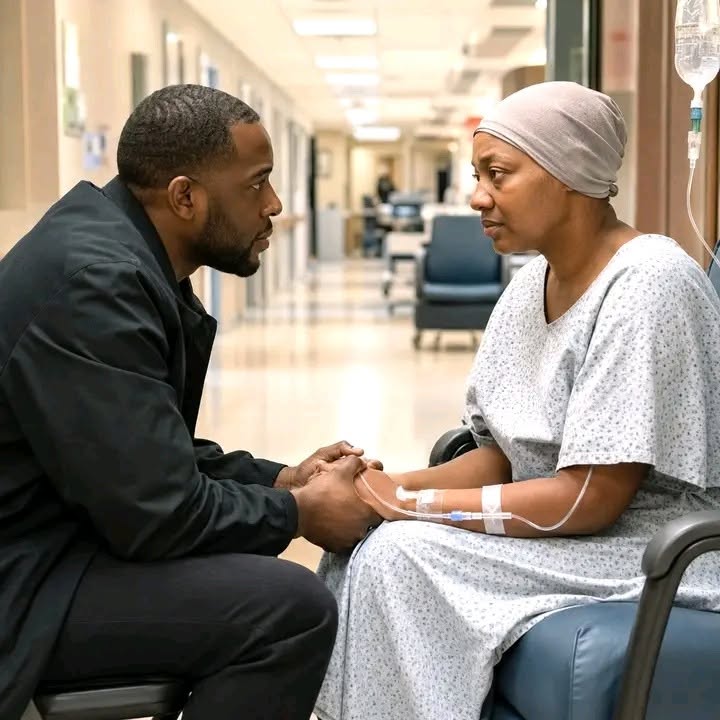
“I knew before the divorce, Arjun,” she whispered, her voice barely carrying over the hum of the hospital’s ventilation system. “I found out right after the second miscarriage. The doctors did some deeper blood work. It wasn’t just a complication with the pregnancy. It was leukemia.”
The words hit me like a physical blow. The sterile hallway seemed to tilt, the white fluorescent lights blurring into a harsh streak.
“You knew?” I choked out, my grip on her cold hand tightening. “You knew while we were still married? Why didn’t you tell me, Maya? Why did you let me walk away?”
A faint, heartbreaking smile touched her pale lips, though her eyes remained entirely hollow.
“Because you were already drowning, Arjun,” she said softly, turning her gaze back to the empty wall ahead. “I watched you bury yourself in your work. I watched you flinch every time you looked at the empty nursery. You were breaking from the grief of losing our babies, and I knew… I knew if I told you I was dying, you wouldn’t stay out of love. You would stay out of duty. You would have turned into my nurse, and you would have hated the burden.”
She pulled her hand gently from mine, clutching the thin fabric of her hospital gown.
“I loved you too much to watch you stay with me out of guilt,” she whispered. “So when you asked for the divorce, I chose to give you your freedom while you still had a chance to remember me as a wife, not a patient.”
The Weight of the Silence
Every late night at the office, every avoided conversation, every cold dinner I had complained about rushed back to me, twisting into a suffocating knot of shame in my chest. I hadn’t been giving her space; I had been abandoning her when she was fighting for her life in the quiet corners of our home. The silence that had filled our house wasn’t emotional distance—it was the sound of Maya carrying the weight of her own mortality so I wouldn’t have to.
“Who is here with you?” I asked, looking around the bustling corridor. “Where is your family? Your mother?”
“My mom is coming from India next week,” she said, her voice exhausted. “But the chemotherapy cycles are aggressive. I didn’t want her to see me like this until I had to. I’ve been managing.”
Managing. She was thirty-two years old, sitting alone in a Budapest clinic, watching poison drip into her veins from a plastic bag, completely isolated because she had tried to shield the people she loved from her pain.
“No,” I said, standing up and wiping a sudden, fierce tear from my face. “You aren’t managing alone anymore.”
The Return
I didn’t ask for permission. I didn’t act like the husband who had a legal right to be there, because I had signed that right away sixty days ago. But I acted like the man who still loved her.
I walked straight to the nurse’s station, tracked down her primary oncologist, and spent the next hour reconstructing the medical reality I had blindly ignored. The prognosis was difficult, but the doctors were hopeful; she just needed a matching bone marrow donor and a strict regimen of care.
When I walked back into her room later that evening, she had been moved from the hallway back to a proper bed. She looked at me with a mixture of fear and exhaustion as I set my coat down on the visitor’s chair.
“Arjun, go home,” she muttered, her eyes casting downward. “The papers are signed. You don’t owe me anything.”
“I’m not here because of a piece of paper, Maya,” I said, sitting on the edge of the mattress, looking at her short, cropped hair and the fierce spirit still hiding beneath her tired eyes. “I ran away when things got quiet because I was a coward. I thought leaving was the simpler path. But there is nothing simple about a life without you.”
I reached out, taking her hand again, and this time, I didn’t let go until the warmth from my skin began to transfer to hers.
“You thought you were saving me by keeping this secret,” I told her, my voice breaking but absolute. “But you didn’t save me. You just left me in the dark. Let me stay in the light with you. Even if it’s hard. Even if it’s terrifying.”
The Real Contract
The next two months didn’t look like a romance novel. They looked like clinical charts, medication schedules, nausea, and long nights spent holding a plastic basin over the edge of a hospital bed. I moved out of my rented apartment and spent my nights on the cramped vinyl chair in Room 412 of the Semmelweis Clinic, working on my laptop by the dim glow of the monitors.
I got tested. Rohit got tested. Our colleagues got tested…
On July 14th, a call came from the international donor registry. A perfect match had been found in Germany.
The morning of the transplant, the room was quiet. Maya sat up in bed, a little more color in her cheeks than the day I found her in the hallway. Her mother sat in the corner, quietly praying over a string of beads, while I adjusted the pillows behind Maya’s back.
She looked up at me, her pale hazel eyes finally losing that deep, heavy sadness I had run away from a year ago.
“Are you sure you don’t want to go back to your quiet apartment, Arjun?” she joked weakly, a spark of her old humor returning. “The food here is terrible.”
“I tried the quiet life, Maya,” I said, leaning down to press my forehead against hers. “It’s overrated. I prefer the noise.”
The nurse entered the room carrying the small, clear bag of peripheral blood stem cells—the cells that would rewrite her immune system, the cells that would save her life. As the fluid began to travel down the IV line, Maya closed her eyes, her fingers interlocking tightly with mine.
Two months after our divorce, I thought I had found my ex-wife sitting alone at the end of her story. But as I watched the monitor measure the steady, stubborn beat of her heart, I realized we hadn’t reached the end at all. We had just finally learned how to speak through the silence.
ADVERTISEMENT
