
ADVERTISEMENT
On the morning of the third day, with Adeline’s numbers dropping into a range her doctors described as urgent, the board reconvened one final time. Grace, who had been Josh’s fiercest advocate in every meeting, had brought the transplant team’s letter stating plainly that time had become the deciding factor and that no comparable donor existed in the registry. The board approved an emergency exception, with conditions: Josh would be reassigned off Adeline’s direct care team permanently after the donation, all follow-up decisions would run through an independent physician, and the donation itself would happen immediately, that same morning, before anyone could change their mind again.
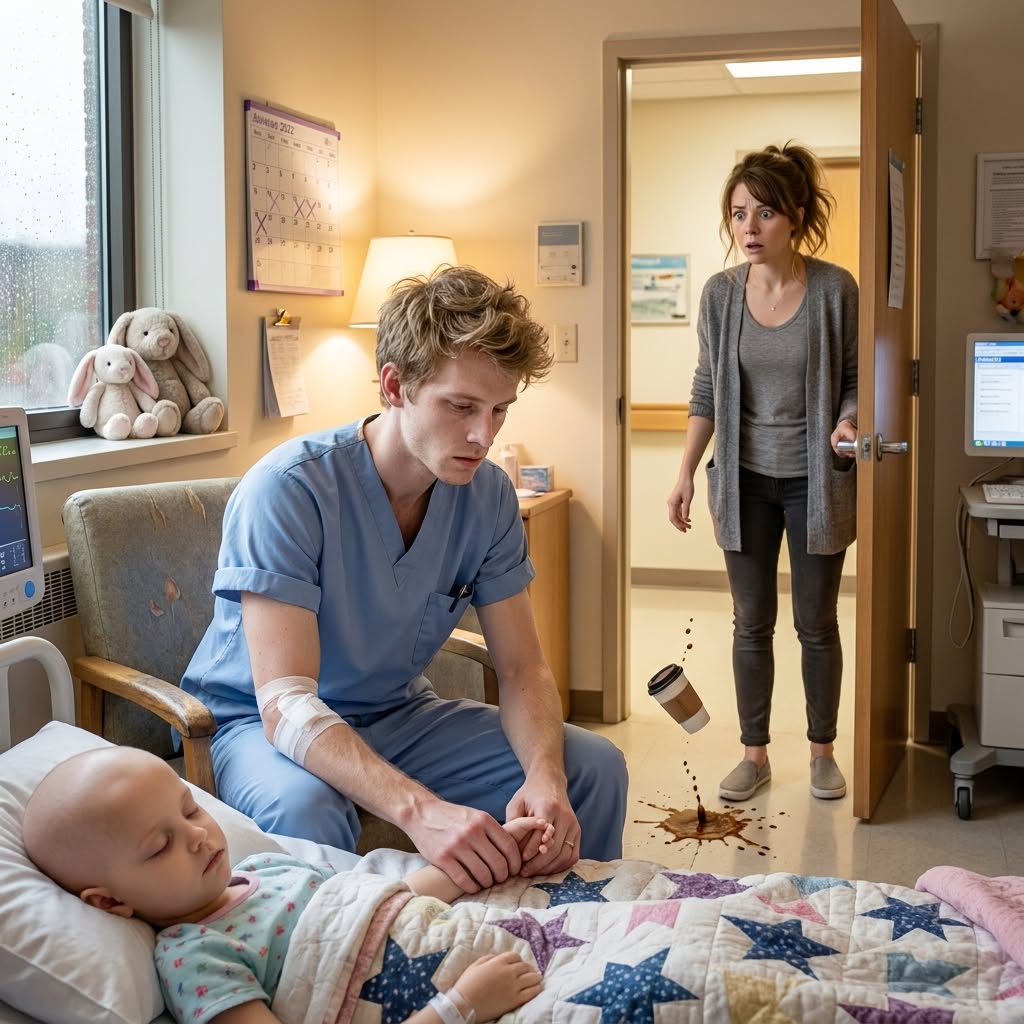
He’d gone into the outpatient procedure suite at six a.m. and come back up to Adeline’s room three hours later, still woozy from the anesthesia, holding a bag of marrow that represented the best chance his patient — his friend, though none of us had said that word yet — had of surviving the year.
“I didn’t want you finding out from a chart,” he told me now, in the wrecked quiet of that room, coffee drying on the floor between us. “I wanted to be the one to tell you, once I knew it would actually happen. I’m sorry it took this long. I’m sorry you spent three days thinking something terrible was happening to her.”
I crossed the room and sat down hard in the chair beside him, my legs no longer entirely willing to hold me up. I looked at the bandage on his arm, at the bag on the tray, at my daughter’s small hand curled inside his larger one, and I understood that the fear I’d been carrying for three days had been real, just aimed at the wrong shape entirely.
“You gave her your marrow,” I said, because I needed to hear myself say it to believe it.
“I gave her a chance,” he said quietly. “The marrow’s just biology. She did the rest herself, every day, longer than anyone should have to.”
ADVERTISEMENT
